

The YA Book is Dead and Wattpad is the Culprit
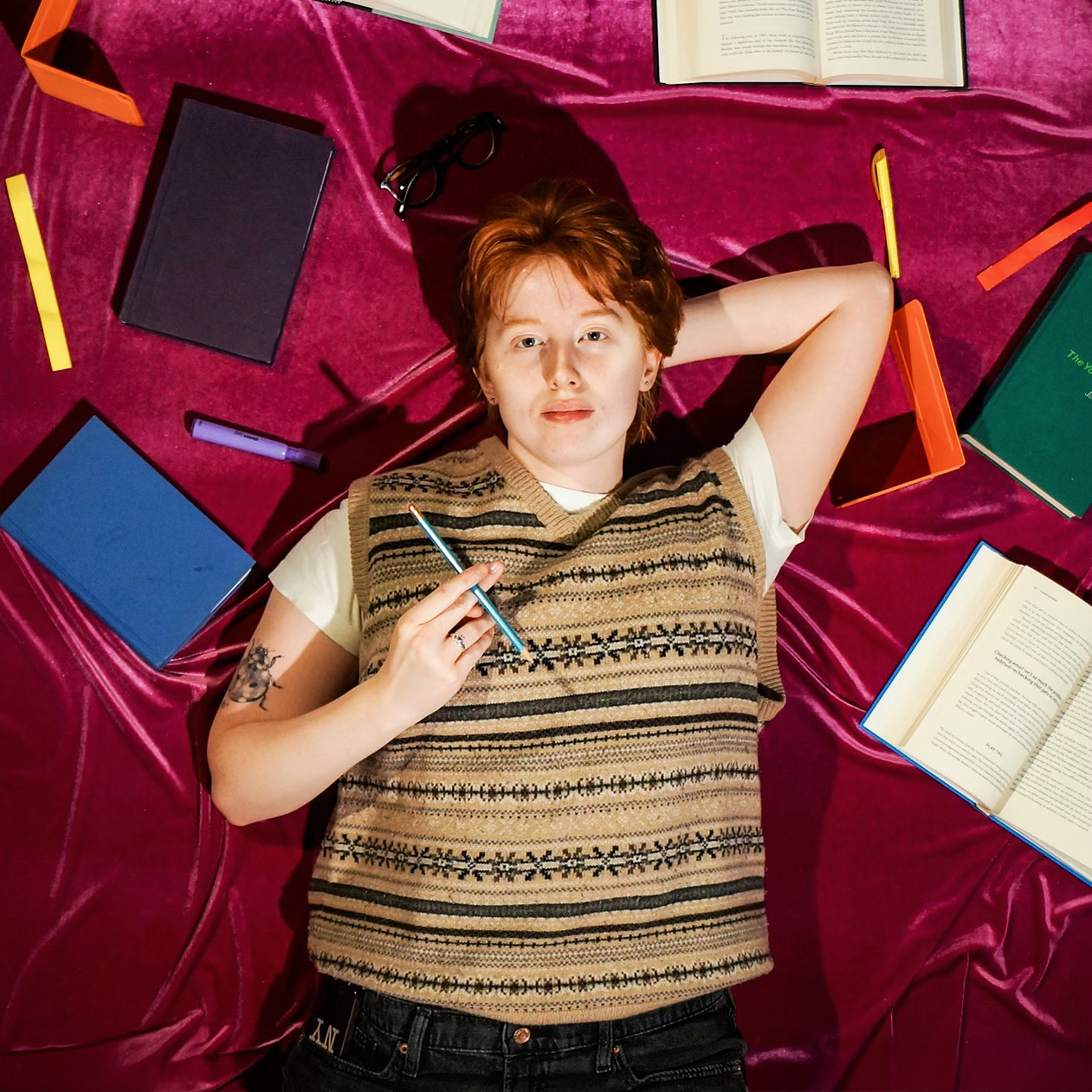
Critical thinking is out, enemies-to-lovers is in.
These days, walking into Indigo is like entering a dystopian nightmare. Front and centre is their '#SpicyBookTok' section, overrun with books whose covers read like bad rom-com posters. The mention of TikTok is quite jarring, considering the selection would give anyone the urge to lace up some black high-top Converse, don Aéropostale leggings and a Victoria Secret Pink hoodie, wrap up their light brown balayage in a messy bun and gaze their dark blue orbs on an enemies-to-lovers romance.
Commercial bookstores are now overwhelmingly a place for this type of book—the kind that once was only accessible on self-publishing sites such as Wattpad or Archive of Our Own. This genre of literature’s journey from behind a screen to the mainstage is mysterious, but one not without its key players.
The success of Anna Todd’s After was unforeseeable. Todd worked as a Waffle House employee before becoming a worldwide best selling author, receiving a four-book deal and later a production deal for several feature-length films based on the series. The novel’s humble beginnings were on Wattpad, as an online outlet for young One Direction fanatics, due to the thinly-veiled parallels between the boyband’s members and characters in the novel.
For self-published Toronto author Jaz Dies, the publication of authors like Todd is not only disheartening, it is a conscious, profit-driven destruction of the legitimacy of literature. “Whatever interest platforms [like Wattpad] might have for the literary industry is entirely due to the established audiences writers who publish there sometimes lay claim to. A writer with a following on any platform is an instant safe investment,” says Dies.
Todd’s style of angsty, lustful prose was evidently addictive to consumers. A series with such an adoring fan base was bound to have its fair share of copycats.
Not too long following the publication of After came the whirlwind of Colleen Hoover. With Hoover’s books Ugly Love and It Ends With Us, Todd’s teenage spin on Fifty Shades-esque archetypes became further entrenched in the literary tastes of young readers. Sarah J. Maas is also responsible for birthing this literary hellscape with the A Court of Thorns and Roses series. Both series share a hardworking, optimistic, female protagonist falling for a brooding, rude and perhaps abusive male love interest. Trope-lead story after trope-lead story followed throughout the 2010s. A turning point hit with the emergence of the aforementioned ‘BookTok’.
The beginnings of BookTok; the TikTok established community that invites hopeful readers to engage in literary discussion and the sharing of book recommendations, transformed the modern algorithmic romance genre into an oversaturated virus. Similar books such as Elle Kennedy’s The Deal, Mona Kasten’s Begin Again and Sally Thorne’s The Hating Game were all released within three years of each other following the popularity of Hoover and Maas’ best sellers. Once the pandemic hit, BookTok did too, resulting in the floodgates opening to an infestation of Canva-made covers in bookstores everywhere.
For working Toronto publishing assistant Eleanor Lindsay, BookTok is the ultimate killer of a reader’s agency, “When you seek out something on Wattpad, it’s usually a specific tag or fandom [you’re] looking to engage [with]. On Booktok, you’re fed what you should be interested in.”
This promotionally aggressive, get-successful-quick pathway paved by BookTok is frustrating for writers like Dies. Released in 2021, his book Beauty and Indecency, was consistently rejected for not meeting market standards. “I’ve found the so-called ‘literary world,’ to be no more than market-collective, wholly uninterested in art and wholly interested in business,” he says. “Self published books are not ‘legitimate,’ in the way books backed by traditional publishers are. Like all other fields in the 21st century, literature is a rich man’s game.”
Books such as The Love Hypothesis by Ali Hazelwood is an applicable example of Dies’ assessment. Released in 2021, the beloved BookTok novel follows quirky PhD student Olive Smith falling for hotshot, grumpy professor Adam Carlsen after spontaneously kissing him to convince her friend that she is dateable.
The book sells itself as an enemies-to-lovers fiction by making glaring attempts to break the fourth wall. Quotes like “Everyone likes tall, broody, sullen hunks with genius IQs,” and “He’d clearly never seen a rom-com or read a romance novel in his life,” and most shameless of all “It never occurred to Olive that Dr. Adam Carlsen—known ass—had called her by her name.” The book forces readers to acknowledge that the characters are experiencing love rather than implying it. The lack of metaphors, allusions, implications practically rob readers of grade nine English literacy in real-time.
Lindsay sees this everywhere in her profession, “Booktok has commodified the experience of reading into merely an aesthetic. It seems to me like fewer and fewer people are reading to engage critical thought or [for] the joy of engaging literature, but to be the kind of person who reads.”
“There’s no problem in wanting a cozy mystery or a silly rom com, but readers are settling for the lowest quality, most reductive, repetitive versions of these stories over and over again. Fun and easy can still be clever and engaging,” she adds.
An even-greater perpetrator of dumbing down narrative fiction, is 2022’s Icebreaker by Hannah Grace. This book flips past tropes on their heads. Instead of a brooding, spiteful man and a positive, relatable woman, Icebreaker thoughtfully brings you a brooding, spiteful woman and a positive, relatable man. Uptight figure skater Anastasia Allen is forced to share college ice with the hockey team after a scheduling mix-up. She reluctantly falls for team captain Nate Hawkins.
Unsurprisingly, Icebreaker thrusts the reader into the story as if they are an addict jonesing for a hit. In the 448 page book, the main characters begin their intimacy at infamous page 136. Reaction videos to the near-pornographic dialogue are riddled throughout Tiktok.
The spoon-feeding doesn’t stop there. God forbid Grace let her audience make their own assumptions on the sociopolitical beliefs of each character. In chapter nine, Nate very courteously says “I don’t joke about consent, Anastasia,” before performing any sexual acts on her. Phew.
Both Hazelwood and Grace spared no opportunity to shove diversity and inclusion down the readers throat, so much so that it becomes offensive. Reddit user u/readandrant pointed out some interesting changes to Anastasia’s best friend Sabrina in different versions of Icebreaker, due to backlash Grace faced for the character. Sabrina Allahi, an Arabic speaking Algerian Muslim, is changed to a white girl named Lola in later versions of the book.
“In the book, there are moments where [Sabrina] is speaking Arabic in the background and at some point, she even uses phrases like ‘Ya Allah,’ and ‘Habibi.’... Sabrina does not fully conform to her religion’s practices. She attends parties and drinks alcohol and presumably has one night stands and ends up in a relationship with disabled hockey assistant coach, Robbie,” writes the Reddit user.
Hazelwood’s constant use of the phrase “Carry yourself with the confidence of a mediocre white man,” similarly feels like a hollow grasp at ‘wokeness.’
Ten years after the nuclear bomb that was After, the loose fandom still persists. Titles such as Don’t Want You Like a Best Friend by Emma R. Allen, No After You by Nicole Pyland and If This Gets Out by Cale Dietrich and Sophie Gonzales all allude to themes and speculations surrounding stars like Taylor Swift, Harry Styles and Louis Tomlinson.
Aside from these novels playing out heinous sensuality, parasocialism and toxic relationship-endorsement, their real crime was diluting the art of the narrative to Hallmark channel standards. The public adoration for these tropes appears innocent, until the pattern is so obvious that it begs the question: is it really that readers can’t get enough or can they just not let go of the past?
The new trend in publishing is familiarity. No matter how long it's been since After’s Tessa Young first became swallowed by the drama of falling for Hardin Scott, the blueprint lives on. The consumption of books that follow is perhaps a way of gripping onto the comfort of nostalgia. Either way, it is clear that books made for the average reader are tossing the need for a thought provoking or educational angle in the trash.
There is a positive outcome to the literary world supporting the likes of Anna Todd. Many authors have received publishing deals from posting their work on Wattpad and other public sites. The publishing industry and writing careers are more accessible than ever, opening avenues for untold stories.
Lindsay’s interest in pursuing publishing sparked from reading derivative, fan-work of her favourite books. Now, she is passionate about preserving platforms that host these works.
“[Wattpad and Ao3] give a community a space to engage one another and the media they’re most passionate about. Community is everything in art, and I’m glad for sites like these where writers range from amateur to expert and are unafraid to explore whatever they want to write without the pressure of pleasing a wider audience,” she said.
But for Dies, he fears that these spaces offer too much access for predatory publishers attempting to turn a profit. “An ideal publishing world would be governed by disinterested and pompous critics who thought themselves important because of their sincere faith and expertise in literature. Nothing could be further than the way things are now.”
Regardless, this is the new culture of the beloved literary world. Familiar plots are what motivate people to stick their noses in books nowadays. From crafting the plot to pressing publish, it is all simple. Democratization of publishing means for better or for worse, simple is here to stay.


Comments